Fashion Institute of Design & Merchandising and the grammar of dress
I learned early that schooling can teach you the vocabulary of an image without teaching you how to listen to it. In classrooms where typography met textile, the last lesson was always practice. Visual grammar is not just color theory or composition. It is learning to hear how a sleeve whispers on camera. It is knowing when a pattern will sing and when it will fight with the set. My instincts tell me that training, in any form, is scaffolding. You either tear the scaffolding down or you build higher.
In the studio that training becomes muscle memory. You move faster. You read the light. You anticipate a director saying, we need something more lived in, and you hand them a jacket that already looks like a backstory. For the stylist who came up through formal design study, the technical vocabulary becomes invisible. That invisibility is a superpower. It lets form behave like truth.
IATSE Local 705, call times, and a craft that keeps score
There are jobs that reward glamour, and there are jobs that keep score in minutes. Union life is full of the latter. Being a costumer in a union environment means meeting the clock and the chaos with equal grace. You log continuity with the kind of pedantry that the camera thanks you for. You pack duplicates and backups. You problem solve with scissors and duct tape and the patience of someone who has seen a thousand costume changes go wrong and fixed them.
I respect the ritual of arriving on set. There is a cadence to it. It begins before coffee. Labeling, steaming, fitting, notes. These are practical acts, but they are also acts of translation. A script gives you a skeleton. A wardrobe gives you breath. If you treat that breath as incidental, you are missing half the work. If you treat it as the lead, you are doing the character a kindness.
Family in public: influence without instruction
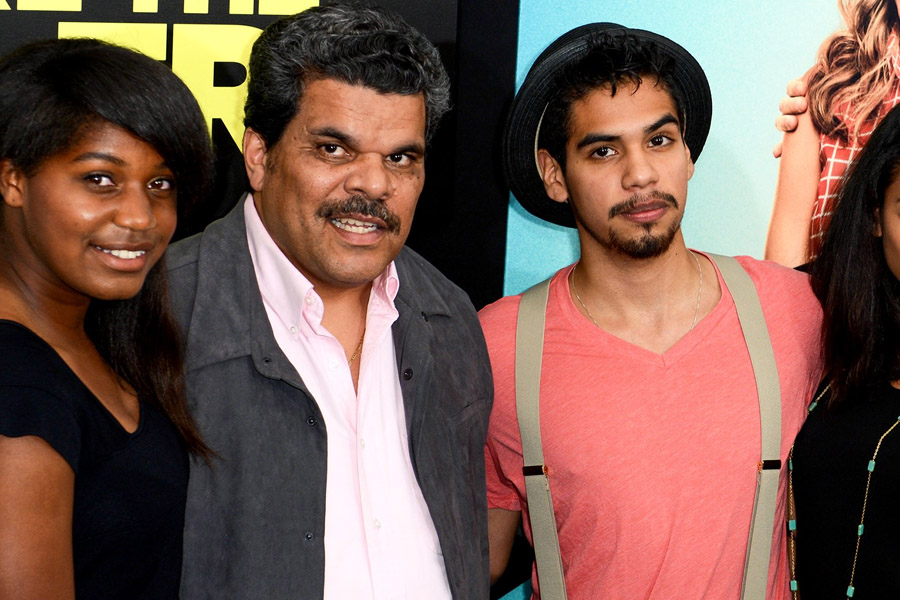
Family can be a visible scaffolding. When a household includes public figures there is spillover, whether you wanted it or not. I have watched how a family portrait in a magazine or a shared appearance at a premiere folds an ordinary person into the shape of narrative. That effect can be useful. It opens doors without opening every door. It also teaches an intuitive media literacy, a comfort in being framed.
I think of proximity to performance not as inheritance but as apprenticeship. The rhythms of a life spent around actors and sets acclimate you to the choreography of publicity. You learn to keep a private life steady while your public life attends to costume, camera, and context. There is a quiet craft to that balancing act. It is not taught in school. It is apprenticed to by experience.
The public studio: building a creative business in Los Angeles
A social feed is a storefront, a lab, and a résumé all at once. In the city where industry and style collide, the feed becomes proof that you can meet deadlines and taste. I see creators who treat their posts as experiments. They test mood, pacing, and tone. They measure which edits translate into bookings. That is commerciality with a conscience.
Those who do this well know how to convert attention into recurring work. A reel that explains a fitting becomes a pitch. A behind the scenes clip becomes a referral. Monetization is rarely neat. It accumulates in brand collaborations, in client referrals, in the slow accrual of trust. Persistence counts. So does restraint. Sometimes less is more. A single well staged image can speak louder than a flood of content.
Practice notes: costume as shorthand for story
When I watch a garment, I read it on three planes at once. There is the tactile plane, which answers the question, will this wear? There is the silhouette plane, which answers, what does this say about who wears it? And there is the cinematic plane, which asks, how will this read through a lens at ninety frames per second. The job is to align those planes.
On low budgets you sacrifice nothing of intention. You borrow narrative from texture and color. You create history with stains, frays, and patches if you must. Those marks are not mistakes. They are shorthand. They tell an actor where to put their hands. They tell the camera where to settle. Costume is a language that does not need subtitles.
The entrepreneur inside the stylist
I believe the modern costumer is part artist, part small business owner. You track invoices. You negotiate reuse. You steward relationships with rental houses, seamstresses, and prop departments. That administrative muscle is often invisible in a photograph. It is, nonetheless, what sustains the creative work.
I watch younger stylists and I coach them to think of their wardrobes like a product line. Each piece has lifecycle costs. Each collaboration writes two checks: one creative, one economic. When you understand both, you are less likely to burn out and more likely to build a practice that endures.
FAQ
Who is Yemaya Briggs Guzman?
I know her as a stylist who moves fluidly between editorial intent and pragmatic costume work. Her presence on social platforms reads like a studio diary. It contains both finished images and process clips. Those pieces together sketch a professional who values craft and clarity.
What does she do professionally?
She assembles personas out of fabric. She constructs visual arguments for characters and brands. Her work sits at the intersection of styling, brand image, and on set costuming. It requires both aesthetic judgment and logistical acuity.
Is she related to a public figure?
Publicly she has connections that place her within a family of performers. That proximity informs her comfort with cameras and audiences, but it does not define her craft. Family can open frames, but the work itself stays on the wardrobe rack.
Where is she based?
Her practice orbits the entertainment and fashion industries centered in a major West Coast city. That location shapes the tempo of bookings and the kinds of collaborations that appear in a portfolio.
Did she study fashion?
Her formation includes formal study in visual design. That training supplies the vocabulary she uses when she constructs looks. It also gives her a method for turning mood into measure.
Is she a union member?
She operates within professional structures that require discipline and standards. Union affiliation indicates a commitment to the protocols of on set work, including continuity, scheduling, and collective bargaining.