A Journey from Law to Artistry
Robyn Krauthammer’s life is a narrative of transformation, where the meticulous world of law intersected with the boundless creativity of art. Born in Australia, her early academic pursuits were steeped in legal studies, earning an LL.B. before continuing her education at St. Anne’s College, Oxford. The rigor of law sharpened her analytical mind, offering her tools to dissect complex principles with precision. Yet, the confines of legal practice never fully aligned with her inner compass.
Moving to the United States marked a pivotal shift. It was here that the canvas replaced the courtroom, brushes supplanted legal briefs, and her creative instincts took center stage. Enrolling at the Corcoran School of Art and the Maryland Institute College of Art, she found herself immersed in the craft of painting and sculpture. These institutions became crucibles for her artistic evolution, teaching her how to translate observation into form and emotion into texture.
Her choice to forsake a structured legal job for creative inquiry reflects creativity—a plunge into the unknown motivated by conviction rather than assurances.
The Precision of Creation
Art by Robyn Krauthammer is frequently a quiet study on structure and subtlety. She uses painting and sculpture to harmonize form and feeling, creating works that engage the audience in a discussion. Her paintings are restrained and elegant, with palettes chosen to inspire meditation.
“Down’s Park,” an oil on panel, shows her ability to capture location and emotion in color. The work’s sale listings reveal her contemplative approach to art.
Her sculptures, albeit less well-known, certainly share the same philosophy. Vision and knowledge of material, weight, and balance are needed for sculpture. The artist must work with the physical world to express their vision while respecting its limits. This negotiation reflects her legal training, where structure and argument had to coexist.
Pro Musica Hebraica: A Cultural Renaissance
In 2008, Robyn Krauthammer co-founded Pro Musica Hebraica alongside her husband, Charles Krauthammer. Their shared vision aimed to reintroduce Jewish classical music to the global stage, rescuing compositions from the shadows of history and presenting them in their full, resonant form.
The organization’s mission is ambitious: not just to perform music but to revive a cultural tradition that speaks to both heritage and humanity. PMH concerts have graced prestigious venues like the Kennedy Center, bringing forgotten composers and neglected repertoires to life. Collaborations with conservatories such as Juilliard highlight the organization’s commitment to excellence, ensuring that the music is not only heard but also understood within its historical and emotional context.
The success of PMH depends on Robyn as CEO. Her leadership emphasizes that music is more than entertainment—it’s memory in action, a link between past and present. She keeps the organization culturally relevant and innovative via selective programs and collaborations.
Family as a Cultural Nexus
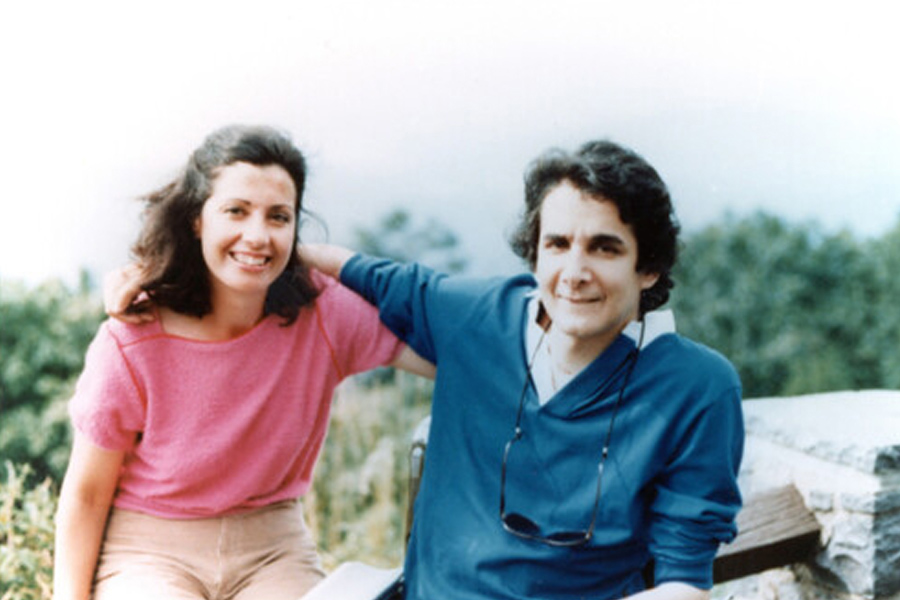
The Krauthammer family represents a unique intersection of intellect, creativity, and public service. Robyn’s marriage to Charles Krauthammer, beginning in 1974, was a partnership rooted in shared ideals and mutual respect. Charles, a Pulitzer Prize-winning columnist, brought a sharp analytical lens to public discourse, while Robyn offered a quieter yet equally profound contribution through her art and nonprofit work.
Their son, Daniel Krauthammer, keeps this legacy alive with his brilliance. Daniel, educated at Harvard, Oxford, and Stanford, is a writer and consultant who promotes the family’s cultural and intellectual accomplishments. His editing of Charles’s posthumous book shows the Krauthammer family’s dedication to maintaining and expanding their intellectual legacy.
Artistic and Cultural Stewardship
Robyn Krauthammer’s dual roles as artist and cultural leader reflect her belief in the transformative power of creativity. Her paintings and sculptures invite viewers to pause and engage, offering moments of introspection in an often chaotic world. Meanwhile, her work with Pro Musica Hebraica serves as a testament to the importance of preserving cultural traditions, not as relics but as living, breathing entities.
This commitment to stewardship is evident in her artistic style. Her compositions often feel intimate, as though the viewer has been invited into a private moment of observation. This intimacy contrasts with the broader scope of her nonprofit work, where the goal is to reach audiences on a larger scale. Yet both endeavors share a common thread: the desire to connect, to resonate, and to inspire.
A Legacy in Motion
Krauthammer’s legacy exists across fields. Journalistic, medical, visual, and musical contributions enrich public life. Robyn contributes uniquely to this legacy. Robyn’s art and nonprofit leadership have created spaces for introspection and rejuvenation, while Charles’s words shaped public discussion.
Pro Musica Hebraica continues to thrive, presenting concerts and initiating projects that honor Jewish composers and their works. The family’s scholarship and memorial initiatives ensure that Charles’s contributions are remembered, while Robyn’s artistic endeavors offer a quieter but equally impactful form of expression.
In many ways, Robyn Krauthammer’s life exemplifies the intersection of individual creativity and collective responsibility. Her journey from law to art, and from private practice to public leadership, reflects a deep understanding that legacy is not just inherited—it is built, sustained, and shared. Through her paintings and her work with PMH, she continues to weave her own thread into the fabric of cultural history.
Keeping Your Yard Safe When Trees Start Acting Suspicious
What Experienced Home Buyers Notice Before They Say Hello
The Smile Makeover Blueprint For Modern Dental Veneers