A Name That Rarely Leaves a Trace
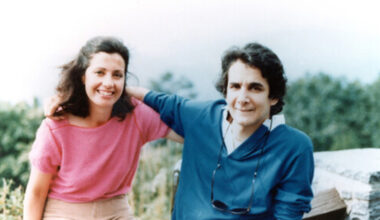
Mary Jo Vermeulen belongs to a category of people modern culture struggles to understand: someone connected to public life who has never seemed interested in becoming public property. In an era that rewards constant visibility, she has remained almost invisible, and that choice gives her story its shape. The facts attached to her name are few, but the space around those facts is revealing. It suggests a life organized around family, steadiness, and a firm boundary between private existence and public appetite.
That boundary matters. Around famous people, privacy can become a fragile thing, easy to breach and harder to restore. Mary Jo Vermeulen appears to have treated privacy not as a luxury but as a principle. That difference is important. Luxury can be taken away. Principle is lived, day after day, like a hearth kept burning in bad weather.
Marriage as a Long Practice
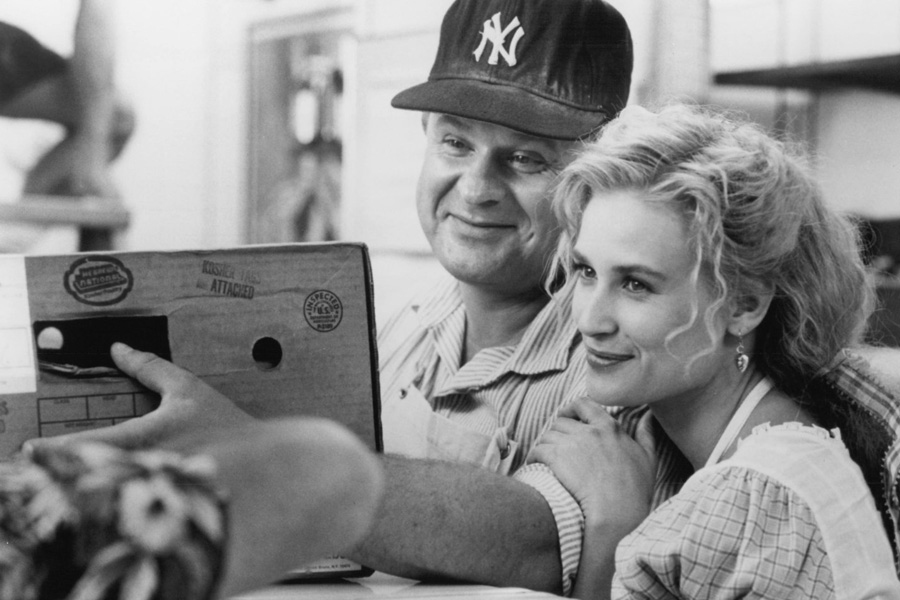
One of the clearest details associated with Mary Jo Vermeulen is her long marriage to actor George Dzundza. The longevity of a marriage can sound simple on paper, yet the reality is usually built from patient routines, negotiated silence, shared humor, and the ability to adapt when life changes shape. A relationship that lasts for decades is not a frozen object. It is more like a bridge that has weathered storms and still carries weight.
For a spouse of a working actor, the demands of the profession can be peculiar. Careers in film and television are often irregular, with long stretches of waiting interrupted by bursts of intense activity. Recognition may come in public, but the labor of keeping a family life stable usually happens elsewhere, away from applause. Mary Jo Vermeulen’s life, as presented in the available record, suggests that she understood that rhythm and helped create a steady counter-rhythm at home.
A marriage like that is rarely glamorous, but glamour is not the same as strength. Sometimes strength looks like ordinary continuity. It looks like shared meals, school years, household decisions, and the quiet confidence that a family can keep its footing even when one person’s career puts them in the public eye.
Family Life Away From the Flash
The family details attached to Mary Jo Vermeulen sketch a domestic world that seems intentionally private. Three children, later grandchildren, and a life centered more on kinship than on publicity. That pattern is not unusual in itself, but it becomes notable when viewed next to the culture surrounding celebrity families, where many people are encouraged to convert every milestone into content.
Mary Jo Vermeulen seems to have chosen another path. In that path, childhoods are not shaped for display. Family identity is not a brand. A daughter is not a headline. Sons are not public projects. Instead, family becomes a house with the curtains drawn just enough to keep the weather out.
This kind of privacy can be read as absence by outsiders, but inside the family it may function as protection. Children raised without a permanent spotlight often inherit something valuable: the chance to define themselves without a crowd forming around every move. That gift can shape adulthood in ways that are difficult to measure. It is invisible in the way roots are invisible, yet it supports everything above ground.
Oregon and the Feeling of a Slower Clock
The mention of Oregon, especially the coastal setting, adds a vivid texture to Mary Jo Vermeulen’s story. Coastal life has a particular mood. The light shifts quickly. The air tastes different. The landscape feels less decorative than elemental. It is a place where weather can dominate the day and where community often feels smaller, closer, and more grounded than in a large entertainment hub.
For a family connected to a public career, the choice to spend time in that setting is telling. It suggests a preference for rhythm over spectacle. It suggests that home may have mattered more than image. In a place like the Oregon coast, the mind can stretch out. There is room for ordinary rituals, room for local theater, room for unhurried conversations and long walks where nobody is trying to become a story.
That kind of environment often suits people who prefer substance to noise. Mary Jo Vermeulen seems, from the available details, to have lived near that quieter current. Not hidden exactly, but unadvertised. Not absent, but not for sale either.
The Value of Being Unsearchable
Today, almost every life is encouraged to leave a digital trail. Profiles, posts, tags, updates, all of it accumulating like footprints in wet sand. To have almost none of that trail is now unusual enough to feel radical. Mary Jo Vermeulen stands apart because so little about her is publicly staged. There are no obvious signs of a self built for endless viewing. No carefully managed persona. No public performance of intimacy.
That can make people curious, but curiosity is not entitlement. Some lives resist interpretation because the people living them have decided that not everything needs to be translated into public language. Mary Jo Vermeulen seems to belong to that category. Her silence is not empty. It is structured. It has edges.
In a culture that often mistakes visibility for importance, that silence can be difficult to appreciate. Yet there is dignity in refusing to overexplain oneself. There is also wisdom in knowing that some things become less real when they are constantly exposed. Like a candle in too much wind, a private life can flicker out if it is made to perform continuously.
What a Private Role Can Mean
Mary Jo Vermeulen’s story invites a broader thought about the people who live beside public figures. They are often treated as footnotes, but footnotes can hold the frame together. The person who manages the texture of everyday life may never appear in a cast list, yet their influence can shape the emotional architecture of a household. They are the hand on the door latch, the keeper of schedules, the person who notices what others overlook.
This does not mean assigning her a role she has not claimed. It means recognizing that lives lived outside the spotlight are often active in ways the spotlight cannot capture. A family is not sustained by image alone. It is sustained by attention, repetition, trust, and a thousand small acts that leave no red carpet behind them.
Mary Jo Vermeulen’s life, as described in the available record, seems to reflect that kind of quiet labor. Not the labor of performance, but the labor of continuity. Not a public legend, but a private architecture. And sometimes that is where the truest work is done, in the beams no audience sees and the rooms no stranger enters.
Why Her Story Still Matters
Mary Jo Vermeulen matters because her life complicates a common assumption. We often think significance must be loud, documented, and widely discussed. Her story suggests otherwise. A person can matter deeply within a family, within a marriage, within a small circle of people, without becoming a public symbol. That kind of life may not produce spectacle, but it can produce stability, and stability is one of the rarest accomplishments in any era.
There is also something instructive about the restraint of her public presence. It reminds readers that not every connection to fame must become a performance. Some people choose a narrower lens, and the choice itself can be a form of strength. Mary Jo Vermeulen appears to have lived inside that narrower lens, carrying family life with an almost old-fashioned seriousness, like someone tending a lamp during a power outage.
The result is a portrait that is less about celebrity than about character. It is about keeping faith with a private life in a public age, about choosing shelter over spectacle, and about building a world that does not need constant applause to remain whole.
Choosing The Right Manager For Rentals And Homeowner Communities
When Your Pet Turns Dinner Into A Detective Mystery
Park City Comes Alive Through Art Music And Mountain Culture